


The job is done, the customer is happy, and then comes the part that still slows too many service businesses down – getting paid. If you run HVAC calls, plumbing routes, electrical jobs, field services, home cleaning, landscaping, pest control, or repair work, mobile payment processing for service businesses can close that gap fast. It gives you a practical way to take cards, debit, ACH, and digital payments wherever the work happens, instead of waiting on checks, phone calls, or late invoices.
For a lot of owners, the real issue is not whether mobile payments are useful. It is whether the system actually fits the way the business runs. That means looking past flashy features and focusing on what matters in the field: speed, reliability, simple pricing, easy setup, and support that answers when something goes wrong on a Saturday.
Why mobile payment processing for service businesses matters
Service businesses do not get paid the same way a retail store does. You are not standing behind one fixed counter all day. Your team is moving between job sites, collecting deposits, charging for completed work, sending invoices after service, and sometimes taking cards over the phone. A payment setup that only works in one location creates friction right where cash flow matters most.
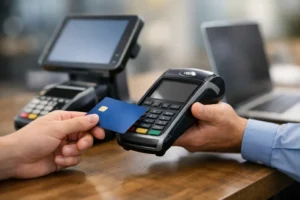
Mobile payment processing fixes that by bringing the payment point to the customer. A technician can accept a tap, dip, or swipe on site. An office manager can send a payment link before the crew leaves. A contractor can take a deposit at an estimate appointment. That means fewer delays, fewer forgotten invoices, and less time chasing money already earned.
There is also a customer experience side to this. People expect convenience. If a homeowner can pay from their driveway, by texted invoice, or by card on a phone or handheld terminal, the transaction feels simple. If they have to find a checkbook or call later with a card number, the chance of delay goes up.
What a good mobile setup should actually do
A strong mobile payment system is not just a card reader clipped onto a phone. For most service businesses, it should support several ways to take payment depending on the job and the customer.
You may need in-person card acceptance for same-day jobs, invoicing for larger tickets, recurring billing for service plans, and a virtual terminal for phone payments. If your accounting team uses QuickBooks, integration matters because rekeying payments by hand creates mistakes and extra office work. If you have more than one technician, the system also needs a clean way to track who took what payment and when.
Reliability matters just as much as features. Some providers offer plenty of tools but weak support or confusing statements. That can become expensive fast. A lower advertised rate does not always mean lower actual cost if you are hit with monthly fees, equipment leases, contract penalties, or poor dispute handling.
The payment methods customers expect now
Most service companies still think first about credit cards, and that makes sense. But the best mobile payment processing for service businesses usually includes more than card acceptance alone.
Debit is standard. Tap-to-pay matters because many customers prefer it and transactions move faster. ACH can be a smart fit for larger invoices where card fees feel heavy. Payment links and emailed invoices help when the decision-maker is not on site. Recurring billing is useful for memberships, maintenance plans, and scheduled service programs.
This is where it depends on your sales model. If you do mostly one-time emergency calls, speed at the point of service may matter most. If you run ongoing contracts, then invoicing and recurring payments may deliver more value than the hardware itself. The right provider should be able to support both without making you stitch together separate systems.
Cost is important, but pricing clarity matters more
Every business owner wants to lower processing costs. That is reasonable. But when comparing providers, the better question is not just, What is the rate? It is, What will I actually pay each month, and what am I locked into?
Service businesses often get burned by teaser pricing. The advertised percentage looks low, but then you find statement fees, PCI fees, batch fees, gateway fees, equipment costs, or a long-term contract with an early termination penalty. That is not savings. That is just delayed frustration.
Look for straightforward pricing, no monthly contract if possible, and equipment terms that make sense. Free equipment can be a real advantage if it fits your workflow and is not tied to a bad long-term agreement. If you are switching providers, contract buyout options may matter too. For many businesses, escaping a bad processing relationship is just as valuable as shaving a few basis points off the rate.
Hardware should fit the field, not the other way around
Not every mobile service business needs the same equipment. Some can operate well with a phone-based reader. Others need a dedicated wireless terminal that can handle long days, multiple transactions, and rough conditions.
If your techs are often outdoors, moving fast, or wearing gloves, ease of use matters. If they are taking larger tickets, receipts and customer signatures may matter more. If internet service is spotty in rural areas, ask how the system performs with weak connectivity and whether there are offline options.
The cheapest hardware is not always the best choice. But overbuying is common too. A small service business with two trucks may not need a full POS buildout. What it needs is durable equipment, quick training, and a clean way to get money into the bank without adding office headaches.
Support is not a side issue
This is where many national providers fall short. On paper, the platform looks good. Then a payment stalls, a terminal will not connect, or a charge needs to be keyed in after hours. Now you are stuck in a phone tree while your customer waits.
For service businesses, support affects revenue in real time. If your crews work evenings or weekends, seven-day support is not a luxury. It is part of the product. The same goes for onboarding. Setup should be fast, clear, and practical. Your provider should help configure devices, explain reporting, and make sure the invoicing and accounting side is working before you are live.
That local, relationship-based approach is one reason businesses in North Georgia often prefer working with a company that knows the market and answers the phone. Patriot Processing has built its model around that kind of merchant support, with flexible terms and payment tools that work across in-person, online, and phone transactions.
How to choose the right provider
Start with your payment flow, not the sales pitch. Where do customers pay you now? At the door, after the job, over the phone, or on a monthly billing cycle? Any provider worth considering should be able to map its tools to that real process.
Then look at the practical details. Ask about contract length, monthly fees, equipment costs, deposit timing, QuickBooks integration, invoicing, recurring billing, and chargeback support. If you already use another processor, ask what switching looks like and whether there is help with current contract costs.
Also be honest about growth. A setup that works for one owner-operator may not work once you add office staff and multiple trucks. Choose a platform that can scale with you without forcing a complete rebuild six months later.
The real payoff
When mobile payments are done right, the benefit is not just that you can accept cards in the field. The real payoff is operational. You get paid faster. Your technicians spend less time on collections talk. Your office spends less time reconciling scattered transactions. Your customers have an easier experience, and easier usually means faster payment.
That kind of change may sound small, but it stacks up quickly. Better cash flow helps payroll, inventory, fuel, scheduling, and growth decisions. It also gives you a more professional close to every job, which matters in competitive service markets.
If your current payment setup still depends on delayed invoices, clunky hardware, or support that disappears when you need it, it may be time to simplify the whole process. The best mobile payment system is the one that lets your team finish the work, take the payment, and move on to the next job without friction.






No comment yet, add your voice below!