

A lot of businesses do not have an invoicing problem. They have a payment problem.
The invoice goes out on time. Then the waiting starts. A customer mails a check late, calls to update a card, or asks for a copy of the invoice that was already sent last week. Meanwhile, your team is chasing balances, posting payments by hand, and trying to keep accounting records clean. That is where invoice payment processing software starts to matter. It does more than send invoices. It gives customers an easier way to pay and gives your business a cleaner system for getting paid.
What invoice payment processing software actually does
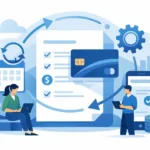
At the simplest level, invoice payment processing software lets you create an invoice, send it digitally, and collect payment through the invoice itself. Your customer opens the bill, sees what they owe, and pays by card, ACH, or other approved methods without calling your office or mailing anything in.
That sounds basic, but the real value is in what happens behind the scenes. Good software tracks invoice status, records partial or full payments, applies them to the right customer account, and keeps your team from working across disconnected tools. Instead of one system for billing, another for payment acceptance, and another for bookkeeping, you get a more practical flow.
For many small and mid-sized businesses, that change is less about technology and more about cash flow. When paying is easy, customers pay faster. When records update automatically, your staff spends less time fixing errors.
Why businesses outgrow basic invoicing tools
Plenty of companies start with simple invoice templates or accounting software that can generate a bill. That may work when volume is low and customers usually pay by check. It becomes a problem when payment habits change or the business adds more sales channels.
A contractor might invoice from the field and need customers to pay from a phone. A medical office may want to text or email invoices after a visit. An ecommerce company with wholesale accounts may need recurring billing for some clients and one-time invoices for others. A retail business may even need invoicing tied to card-on-file payments. Basic systems often break down once the business needs flexibility.
The other issue is follow-up. Sending an invoice is only one piece of the job. If your software cannot send reminders, support multiple payment types, or sync with accounting tools like QuickBooks, your team ends up doing the same work twice. That costs time, and it usually slows down collections.
The biggest features that matter most
Not every business needs every feature. But most merchants should pay close attention to a few core functions.
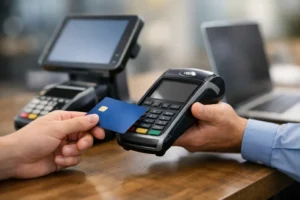
Online payment acceptance is the first one. Customers expect to click and pay. If your invoice payment processing software only sends a bill without a built-in payment option, it is missing the point.
ACH and card acceptance both matter. Cards are fast and familiar, while ACH can be a better fit for larger invoice amounts where processing cost matters more. If your average ticket is high, having both options gives you more control over margins and customer preference.
Automated reminders are another major advantage. Late payments often happen because customers forget, not because they refuse to pay. A polite reminder schedule can reduce collection calls without creating more office work.
Integration is where many businesses either save time or create new headaches. If invoice data and payment data do not flow into your accounting system, you are still stuck reconciling transactions manually. For businesses that already rely on QuickBooks, this is not a bonus feature. It is a requirement.
Reporting also deserves more attention than it usually gets. You should be able to see open invoices, aging balances, payment history, and method of payment without digging through multiple screens. Better reporting helps with collections, but it also helps with forecasting.
Invoice payment processing software and cost control
Business owners usually ask two questions first. Will this help me get paid faster, and what will it cost me?
Those are fair questions because software can solve one problem while creating another. Some platforms look affordable until you add gateway fees, monthly charges, per-invoice costs, hardware needs, or long-term contracts. Others keep rates simple but limit support or integrations.
The right answer depends on your business model. If you send a small number of large invoices, ACH capability and low overhead may matter more than advanced automation. If you send high volumes of smaller invoices, speed, reminders, and easy reconciliation may be the bigger win.
It also depends on how much manual work your current process creates. A platform with slightly higher transaction costs may still save money if it cuts down on labor, follow-up, and accounting cleanup. The cheapest option on paper is not always the least expensive in practice.
Who benefits most from invoice payment processing software
Service businesses usually see fast value because invoicing is central to how they get paid. Home services, repair companies, consultants, legal offices, medical practices, and B2B suppliers all deal with timing gaps between work completed and payment received. A better invoicing and payment setup shortens that gap.
Businesses with mobile teams benefit too. If technicians, project managers, or field reps need to invoice away from the office, software that works across devices can remove delays. The faster the invoice goes out, the faster the payment cycle starts.
Organizations with repeat customers also gain a lot from stored payment methods, recurring invoicing, and easier account tracking. If customers are billed on a schedule, reducing friction every month has a direct impact on revenue consistency.
Even businesses with a strong in-person operation may still need invoicing. Retailers, distributors, and mixed-channel merchants often have some customers who pay at the counter and others who need terms or remote billing. One payment system that handles both can simplify operations.
What to watch out for before you choose
A lot of platforms advertise speed and convenience. Not all of them deliver when your business gets more complicated.
Start with payment flexibility. If the system only works well for card payments but your customers prefer ACH for larger invoices, you may run into resistance. If it handles one-time invoices but not recurring billing, that can become a limit later.
Support matters more than most businesses expect. When invoicing and payments stop working, cash flow stops with them. If you cannot get a real person on the phone when there is a problem, you are taking a risk. That is one reason many businesses prefer a service-driven provider over a hands-off software-only platform.
Contract terms are another area to check carefully. Some providers make onboarding sound easy, then lock merchants into terms that are expensive to leave. Flexibility matters. If your business changes, your payment setup should not become a burden.
You should also ask about implementation. A good system should not require weeks of disruption just to start sending invoices and accepting payments. Setup should be straightforward, and training should be practical enough for your team to use right away.
Why local support still matters
Software is useful. Support is what keeps it useful.
For many merchants, the difference between a decent invoicing platform and a dependable payment solution comes down to service after the sale. If something does not sync correctly, a payment fails, or customers have trouble using the invoice link, you need help quickly. That is especially true for businesses running lean teams with no in-house IT support.
A local, merchant-focused provider can often solve problems faster because they understand how businesses actually operate day to day. They are not just selling software licenses. They are helping merchants collect revenue without extra friction. That service model is a better fit for companies that want clear answers, flexible options, and support that does not disappear after setup.
For businesses in North Georgia and beyond, Patriot Processing fits that approach well by pairing invoicing and payment technology with real support, flexible terms, and practical integrations that make daily operations easier.
The best choice is the one your team will actually use
There is no single best invoice payment processing software for every business. A company with a few large monthly invoices has different needs than a healthcare office sending dozens of patient balances each day. A field service company needs mobility. A B2B wholesaler may care more about ACH and accounting sync. It depends on volume, ticket size, customer habits, and how your staff works.
What should stay constant is the goal. Your invoicing system should help you get paid faster, cut down on manual work, and make life easier for both your team and your customers. If the platform is hard to use, hard to support, or hard to afford, it is the wrong fit no matter how many features it offers.
The best move is usually the practical one. Choose a solution that lets customers pay the way they want, keeps your records clean, and gives you support when you need it. Getting paid should not be the hardest part of doing good work.




No comment yet, add your voice below!